

Aglaonema: The Effortlessly Beautiful Chinese Evergreen (And Why We're Loving Ours This Week)
There are plants that ask for attention, and then there are plants that simply make a room feel better.
Aglaonema, better known as Chinese evergreen, belongs firmly in the second category. With full, leafy shapes and patterns that range from silvery green to lipstick red, soft pink, snowy white, and deep forest green, Aglaonema brings a little vintage-chic glamour without requiring a complicated care routine.
That combination is exactly why we’re loving our current Aglaonema lineup. They’re beautiful enough to become a room’s focal point, forgiving enough for a newer plant parent, and comfortable in the lower-light corners where many houseplants begin to sulk.
This week’s selection includes favorites like Aglaonema Red Siam, Aglaonema Night Sparkle, Aglaonema Pink Panama, and more. You can browse the full Aglaonema collection, or keep an eye on our New Arrivals for the latest leafy arrivals.
Why Aglaonema is such an easy houseplant
Aglaonema has a reputation for being one of the most forgiving houseplants around, and honestly, it has earned it.
It tolerates low to medium indirect light, doesn’t need constant watering, and generally adapts well to average household humidity. It grows at a calm, manageable pace, so it won’t take over your bookshelf overnight. Its naturally full shape also means it looks polished with very little styling.
If you’ve ever wanted the leafy presence of a monstera or philodendron but have a darker home, Aglaonema is worth a look. It can be happy near a north-facing window, on a desk away from direct sun, or in an office with steady overhead lighting.
“Low-light tolerant” does not mean “no light needed,” of course. Every plant needs light to grow. But Aglaonema is wonderfully flexible about the amount it receives, especially compared with more sun-hungry plants.
Darker green varieties are usually the most comfortable in lower light. Silver, pink, red, and highly patterned cultivars may appreciate a little more brightness to keep their colors looking their best.
Choosing your Aglaonema personality
The fun part is choosing the look that suits your space. Aglaonema cultivars can feel like completely different plants even though they share the same easygoing nature.
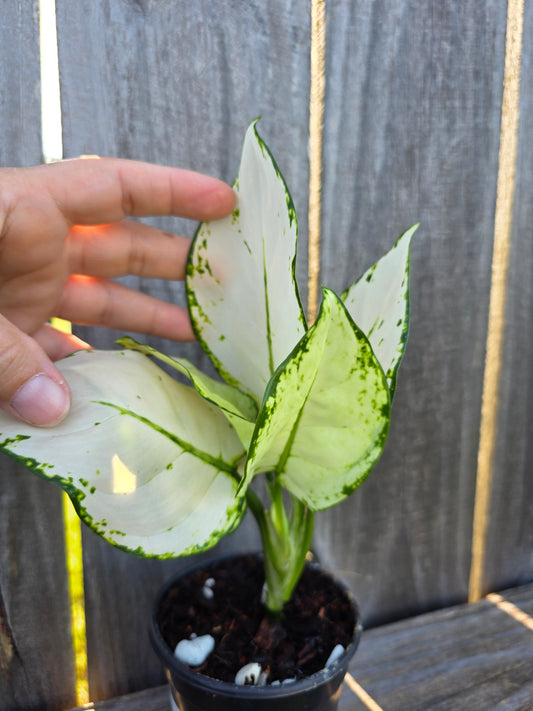
For a bright, clean look: silver and white
Silver and white Aglaonema have a soft, almost painted appearance. They’re lovely against darker furniture, warm wood, or a simple neutral wall.
Aglaonema Super White and Aglaonema White Snow Dream are good choices if you want something light and airy without adding another brightly colored object to the room.
These paler varieties generally prefer medium indirect light so their patterns stay crisp. A few feet away from a bright window, or near a north- or east-facing window, is often a comfortable spot.

For a romantic pop of color: pink
Pink Aglaonema bring color without looking loud. Their leaves can have blush-toned centers, rosy edges, or broad pink sections that look especially charming in a cream pot or on a vintage side table.
Aglaonema Pink Panama, Aglaonema Pink Triphet, and Aglaonema Pink Emerald are lovely for adding warmth to a bedroom, office, or reading nook.
Pink varieties may need slightly brighter indirect light than solid green ones. Think “well-lit room,” not “sunbathing on the windowsill.”
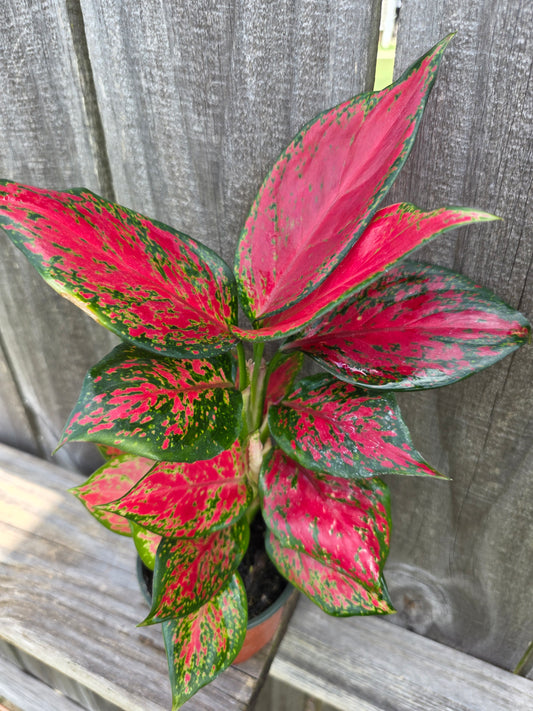
For a little drama: red and orange
Red and orange Aglaonema are the plant equivalent of a great vintage lamp: practical, but with a point of view.
Aglaonema Ruby, Aglaonema Very Red, Aglaonema Red Siam, and Aglaonema Orange Stardust can bring a warm, jewel-toned accent to a room without needing flowers or bright accessories.
Give colorful cultivars bright indirect light to help them hold onto those rich tones. Direct afternoon sun is too much and may scorch the leaves, so a sheer curtain or a spot set back from the window is ideal.
For a classic look: green and softly patterned
If your style leans timeless, choose an Aglaonema with deep green leaves or gentle silver patterning. Aglaonema Katrina, Aglaonema Richard, and Aglaonema Pictum Tricolor each bring plenty of personality while staying easy to place.
These are especially nice for offices, entryways, bedrooms, and any corner where you want greenery that feels composed rather than unruly.
Aglaonema care, without the overthinking
Light
Place your Aglaonema in low to medium indirect light. North-facing windows are often a good match, as are bright rooms where the plant sits away from the glass.
Avoid harsh direct sun, particularly strong afternoon rays. Scorched patches and faded leaves are usually a sign that the light is too intense.
If a colorful Aglaonema begins to lose its pattern or grows very slowly, try moving it a little closer to a bright window: gradually, rather than all at once.
Water
Water when the top 1–2 inches of soil feel dry.
When it’s time, water thoroughly until excess moisture drains from the bottom of the pot. Empty any water left in the saucer so the roots aren’t sitting in a puddle.
Aglaonema prefers soil that is lightly moist between waterings, not constantly wet. During the cooler, darker months, it may need water less often. Your plant’s soil is a better guide than a calendar.
Soil
Use a well-draining houseplant mix and a pot with drainage holes. A mix that allows extra water to move through easily will help prevent the soggy soil that can lead to yellow leaves and unhappy roots.
No need to make this complicated. A quality indoor potting mix with added perlite or bark is a good starting point.
Humidity and temperature
Aglaonema enjoys humidity but usually adapts well to average household conditions. If your home is especially dry, a humidifier, pebble tray, or nearby grouping of plants can help.
Keep your plant in a comfortable room (roughly 65–80°F is ideal) and away from cold drafts, drafty windows, heating vents, and air-conditioning blasts. Chinese evergreen is easygoing, but it does not enjoy being chilled.
Feeding
Feed during the growing season with a balanced liquid houseplant fertilizer diluted according to the product instructions. Once every month or so is a reasonable rhythm for many homes.
There’s no need to fertilize heavily. Too much food can build up in the soil and cause brown leaf edges, so gentle and consistent wins here.
A few common issues, and what they mean
Yellowing leaves: This is often a sign of overwatering or soil that stays wet for too long. Check the soil before watering again and make sure the pot drains freely. One older yellow leaf is not a crisis; several yellowing leaves paired with soggy soil are your cue to adjust.
Brown leaf tips: Dry air, inconsistent watering, or minerals in tap water can all contribute. Try keeping watering more consistent, moving the plant away from a heating vent, or using filtered water if your tap water is particularly hard.
Brown, crispy patches: These can come from strong direct sunlight. Move the plant farther from the window or filter the light with a sheer curtain.
Curling or dropping leaves: Cold drafts are a common culprit. Move your Aglaonema to a warmer, steadier spot and give it time to recover.
Plant care is not a pass-or-fail exam. A leaf can have a story. The goal is simply to notice what your plant is telling you and make one helpful adjustment at a time.
Can you propagate Aglaonema?
Yes. Aglaonema can be propagated from stem cuttings, although division is often the easiest method when a plant has multiple rooted sections.
For a stem cutting, choose a healthy piece with a few leaves and a node: the small point where a leaf or root can emerge. Place it in water or a lightly moist, well-draining growing medium in a warm spot with indirect light. Once roots develop, it can be moved into its own pot.
Go slowly and keep expectations realistic. Propagation is a small experiment, not a deadline.
What about the air-purifying reputation?
Chinese evergreen is often described as an air-purifying plant, based partly on controlled studies of houseplants and indoor pollutants. In a typical home, its effect on air quality is likely modest, and it does not replace ventilation or an air purifier.
Still, there’s something genuinely restorative about adding a healthy, leafy plant to a room. Aglaonema can make a desk, office, bedroom, or quiet corner feel fresher and more lived-in, and that counts for quite a lot.
If you’ve been waiting for a plant that looks special without demanding a full-time job, this week’s Aglaonema collection may be your sign. Browse the Aglaonema collection, or take a look at New Arrivals to see what’s just landed.
For more easygoing plant care, visit our African Violet Tips & Care page or browse African Violets currently available.